
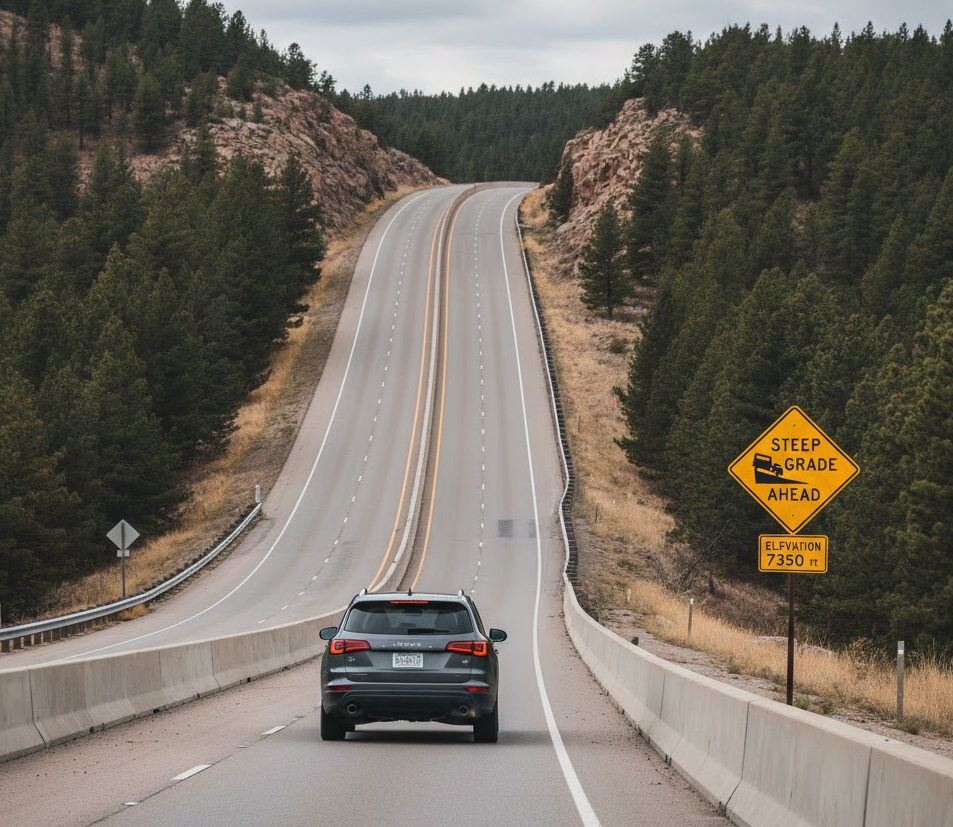
When you’re heading north on I-25 toward Monument Hill or winding up Pikes Peak’s dramatic 19-mile ascent to 14,115 feet, your Nissan’s Xtronic CVT transmission is working considerably harder than on flat terrain. The sustained climbs, elevation changes reaching 7,352 feet over Monument Hill, and Colorado’s altitude create what Nissan calls “severe service conditions”—meaning your transmission fluid degrades faster than standard schedules account for. At Woodmen Nissan Service, expert technicians understand precisely how Colorado’s geography affects your Rogue, Pathfinder, or Altima, ensuring your CVT stays protected.
The Science of “Mountain Stress” on Your Nissan’s Transmission
Mountain driving places extraordinary demands on your transmission. The Nissan Xtronic CVT technology uses a high-strength steel belt running between two variable-diameter pulleys, providing an infinite range of gear ratios without traditional shifting. When climbing Monument Hill’s 1,300-foot elevation gain or Pikes Peak’s 6,000-foot ascent, your CVT continuously works to maintain proper belt tension and hydraulic pressure, generating significantly more heat than flat-terrain driving.

Heat is the primary enemy of transmission fluid. Fresh CVT fluid dissipates heat efficiently, maintaining proper hydraulic pressure and lubrication. But as fluid ages—particularly in high-heat mountain conditions—it loses its ability to cool and protect. That’s when you notice symptoms like high-pitched whining, hesitation uphill, or limp mode activation. Colorado Springs sits at 6,035 feet elevation, and “lifetime” fluid assumptions based on sea-level conditions simply don’t apply here.
Pikes Peak & I-25: Testing Grounds for Transmission Fluid
When heading north on I-25 during holiday travel, you’re climbing Monument Hill—a sustained grade reaching 7,352 feet. This lengthy climb keeps your CVT working harder for miles, generating heat. Stop-and-go traffic during holiday rushes intensifies the stress as your transmission constantly adjusts between acceleration and braking.
Pikes Peak Highway climbs over 6,000 feet in just 19 miles with an average gradient of 6.7%. Your CVT works intensively throughout, constantly adjusting to deliver power efficiently. For many Colorado Springs drivers, mountain driving is regular life. Nissan’s “lifetime fluid” spec assumes sea-level conditions. Colorado’s high altitude, steep grades, and challenging weather demand more. That’s why checking your CVT fluid condition regularly is essential for maintaining transmission longevity.
How Fresh CVT Fluid Protects New Nissan Technology
Modern Nissans use advanced Xtronic CVT technology designed for fuel efficiency and smooth power delivery. The fluid provides hydraulic pressure to adjust pulley diameter, lubricates components to minimize friction, and actively cools the system. When fluid is fresh, your CVT operates exactly as Nissan engineered it—shifting seamlessly and staying cool under demanding conditions.
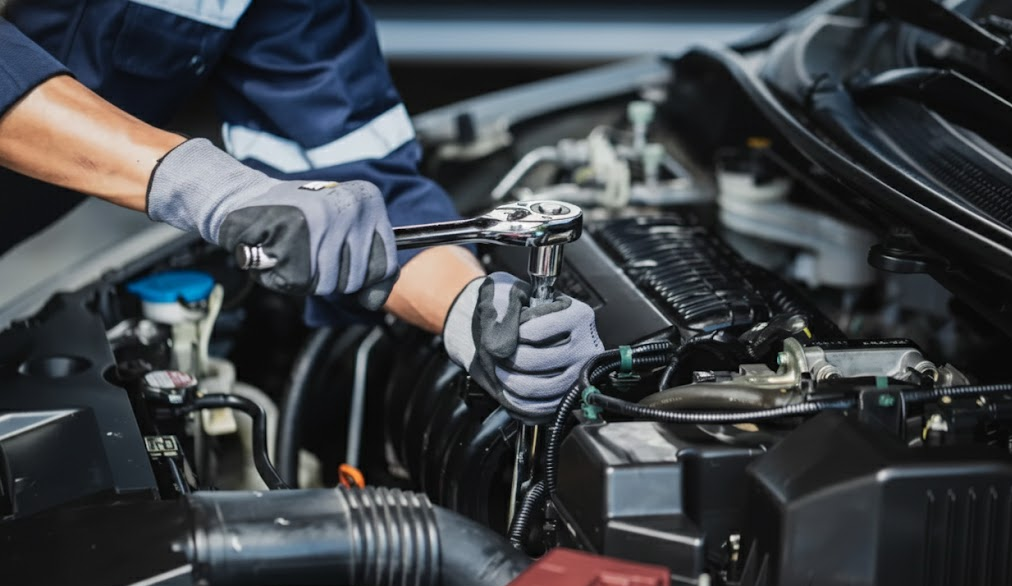
But fluid degrades over time, particularly under severe service conditions. As it breaks down, it becomes less effective at cooling, creating a cycle: hotter transmission, faster fluid degradation, more heat buildup. You’ll notice performance changes—a slight whine or hesitation when merging onto I-25. These early warnings indicate your fluid needs attention before problems become expensive. Fresh Genuine Nissan CVT Fluid NS-3 restores transmission performance, ensuring proper cooling and lubrication.
NS-3 fluid is chemically engineered specifically for Nissan’s steel belt and pulley system—not generic CVT fluid. Using wrong fluid can cause internal slipping or wear. Getting service at Woodmen Nissan Service means getting the exact fluid your transmission was designed to use, installed by technicians who can digitally monitor your transmission’s health.
3 Signs Your CVT Needs Attention Before Your Holiday Trip
Paying attention to how your Nissan behaves helps you catch CVT issues early, preventing inconvenient breakdowns during important trips. Here are three specific signs that indicate your transmission needs professional attention:
- High-Pitched Whine or Whirring Sound: This distinctive noise, particularly after extended highway driving or when accelerating from a stop, indicates your CVT fluid has degraded and isn’t properly lubricating components. You might hear it when climbing Monument Hill or accelerating onto I-25. Fresh fluid can often eliminate this noise while preventing further wear.
- Sluggishness or Hesitation on Inclines: If your Nissan struggles to find power when climbing hills, or you experience that “rubber band” sensation where the engine revs but acceleration lags, your CVT is dealing with degraded fluid that can’t maintain proper hydraulic pressure. This becomes especially noticeable on sustained climbs or when passing on mountain highways.
- Overheating Warning or Limp Mode: Modern Nissans monitor transmission temperature. If fluid is too degraded to cool effectively, the transmission may reduce available power to protect itself. While this safety feature prevents catastrophic damage, it’s deeply inconvenient during a road trip. You’ll notice dramatically reduced acceleration and sometimes a warning light.
If you’re experiencing any of these symptoms, particularly with holiday travel plans coming up, scheduling a transmission inspection now saves you from potential roadside trouble later. The expert technicians at Woodmen Nissan Service can assess your CVT’s condition, check fluid quality, and recommend appropriate service to get your Nissan ready for whatever adventures you have planned.
The Woodmen Nissan “Severe Service” Advantage
Nissan dealerships offer expertise, equipment, and parts quality that dramatically affect your transmission’s long-term health. Woodmen Nissan Service technicians are specifically trained on Xtronic CVT systems and understand how these transmissions behave, what normal operation looks like, and how to identify potential issues early.
Woodmen Nissan Service uses only Genuine Nissan CVT Fluid NS-3. Generic shops use universal fluid that lacks the precise friction modifiers your Nissan requires, potentially voiding your warranty. Dealership technicians access your vehicle’s computer to monitor “fluid degradation count”—a calculation of transmission stress. This data-driven approach provides precise service recommendations based on your actual driving, not generic intervals.
As a locally owned and operated business by Jay Carley Jr., Woodmen Nissan Service combines authorized Nissan dealer expertise with neighborly local care. The team understands Colorado Springs driving conditions—they know Monument Hill and Pikes Peak firsthand.
Understanding Colorado’s “Severe Service” Definition
Nissan defines “severe service” as frequent short trips, stop-and-go traffic, dusty conditions, towing, and operating at high altitudes on mountainous terrain. Colorado Springs drivers hit nearly every criterion. The 6,035-foot elevation combined with dramatic elevation changes means virtually every local driver should follow the severe service schedule.
Under severe service, Nissan recommends inspecting CVT fluid every 15,000 miles—considerably more frequent than “lifetime” fluid for standard driving. Regular Monument Hill climbs, weekend mountain trips, or occasional Pikes Peak drives create exponentially more transmission stress than flat highway driving. Following the severe service schedule protects an expensive component from premature wear and maintains resale value.
Preparing Your Nissan for Winter Mountain Travel
Winter adds complexity to mountain driving. Monument Hill’s elevation makes it prone to severe weather—Monument averages over 90 inches of snow annually versus Colorado Springs’ 33 inches. When winter storms hit, I-25 over Monument Hill frequently experiences hazardous conditions, and your CVT needs to be optimal to handle these safely.
Cold weather thickens transmission fluid, affecting flow until the transmission warms up. Degraded fluid is even more affected, potentially causing sluggish performance when you need responsive power most. Fresh fluid flows properly even in cold conditions. Before winter, schedule a pre-winter inspection. Woodmen Nissan Service offers complimentary multi-point inspections checking your CVT, battery, tires, brakes, and coolant.
CVT Maintenance Schedule Comparison
| Driving Condition | Environment Example | Recommended CVT Fluid Inspection Interval | Why It Matters |
|---|---|---|---|
| Standard Service | Sea-level, flat terrain, moderate climate, highway driving | Lifetime (monitor as needed) | Minimal heat stress, fluid degrades slowly |
| Severe Service (Altitude) | Colorado Springs daily driving (6,035 ft elevation) | Every 15,000 miles | High altitude affects engine and transmission operation |
| Severe Service (Mountain Driving) | Regular I-25 Monument Hill climbs, Pikes Peak drives | Every 15,000 miles | Sustained grades generate significant heat |
| Extreme Service | Frequent towing, heavy loads, daily mountain commutes | Every 15,000 miles | Maximum stress requires frequent fluid replacement |
Note: Always consult your owner’s manual for manufacturer recommendations specific to your model year and follow the guidance of qualified technicians.
Real-World Benefits of Proper CVT Maintenance
Regular CVT fluid service delivers tangible benefits. Proper maintenance dramatically extends your transmission’s lifespan—a well-maintained CVT can easily last your vehicle’s entire life. Performance benefits are immediately noticeable—drivers report their Nissan feels more responsive, accelerates smoothly, and operates quietly after service. Fuel economy improves too, as efficient transmission operation with fresh fluid means your engine works less hard, translating to better MPG.
Most importantly, regular maintenance provides peace of mind. When planning holiday travel to Denver or skiing in Breckenridge, knowing your transmission is properly maintained means one less worry. That confidence is genuinely valuable for Colorado drivers facing demanding conditions regularly.
Additional Pre-Trip Vehicle Checks
Beyond CVT maintenance, prepare your Nissan for mountain travel by checking other key systems. Tires need adequate tread for wet and snowy conditions—Colorado requires proper tires or chains under the Traction Law. Woodmen Nissan Service offers complimentary tire pressure checks. Your battery deserves attention before winter, as cold weather reduces capacity. Complimentary battery testing measures health accurately, allowing proactive replacement.
Frequently Asked Questions
Q: Do I really need to change my CVT fluid if my manual says it’s “Lifetime” fluid?
A: “Lifetime” often assumes standard driving conditions at sea level, which don’t reflect Colorado Springs reality. The combination of high altitude, steep grades like Monument Hill and Pikes Peak, and significant temperature variations places your vehicle squarely in the “Severe Driving Conditions” category. Inspecting your fluid quality every 15,000 miles ensures your CVT stays healthy under these demanding conditions.
Q: Will driving in the mountains overheat my Nissan CVT?
A: It can if the fluid is old or degraded, because aged fluid loses its ability to dissipate heat effectively. Fresh fluid provides proper cooling capacity to handle sustained climbs without overheating. If you’re planning trips with heavy cargo or steep climbs, a fresh fluid exchange provides genuine insurance against overheating and gives you reliable performance when you need it most.
Q: Why should I choose a dealership for CVT service over a quick-lube shop?
A: Nissan Xtronic transmissions are highly specialized systems that require specific expertise and fluids. Using wrong or generic fluid can cause internal slipping or damage that might not show up immediately but shortens your transmission’s life significantly. At Woodmen Nissan Service, technicians use only Genuine Nissan CVT Fluid NS-3 and can digitally monitor the “fluid degradation” count in your vehicle’s computer—diagnostic capability that generic shops typically don’t have access to.
Q: How do I know if my CVT fluid needs replacement?
A: Warning signs include high-pitched whining sounds, hesitation or sluggishness when accelerating uphill, the “rubber band” feeling where engine revs don’t match acceleration, and in severe cases, the transmission entering limp mode. If you notice any of these symptoms, schedule an inspection promptly. Even without obvious symptoms, having your fluid checked at 15,000-mile intervals under Colorado Springs’ severe service conditions is smart preventive maintenance.
Q: What makes Monument Hill particularly challenging for transmissions?
A: Monument Hill represents a sustained 1,300-foot elevation gain over several miles on I-25, reaching 7,352 feet at its peak. Unlike a short hill you can power over quickly, this lengthy climb keeps your CVT working continuously under load, generating steady heat throughout the ascent. Combined with holiday traffic or winter weather, the stress on your transmission intensifies significantly. This is exactly the type of severe service condition that demands more frequent fluid maintenance.
Schedule Your CVT Protection Service Today
Don’t let a degraded transmission derail your holiday travel, weekend mountain adventures, or daily Denver commute. The factory-trained experts at Woodmen Nissan Service understand how Colorado’s terrain affects your Nissan’s Xtronic CVT. With advanced diagnostic equipment, Genuine Nissan parts, and specialized severe service knowledge, the team provides expert care your transmission deserves.
Colorado Springs’ elevation changes—from 6,035 feet to Monument Hill’s 7,352 feet to Pikes Peak’s 14,115-foot summit—are roads you drive regularly. Protecting your CVT with appropriate maintenance is essential for reliable performance. Fresh NS-3 fluid ensures your transmission stays cool and responds instantly when you need power for merging, passing, or climbing safely.
Click here to schedule your CVT inspection and get your Nissan ready for confident mountain driving!
Or visit Woodmen Nissan Service at 6840 Vincent Drive Colorado Springs, CO 80918, and let certified technicians ensure your transmission is properly protected for whatever adventures Colorado’s mountains have in store.